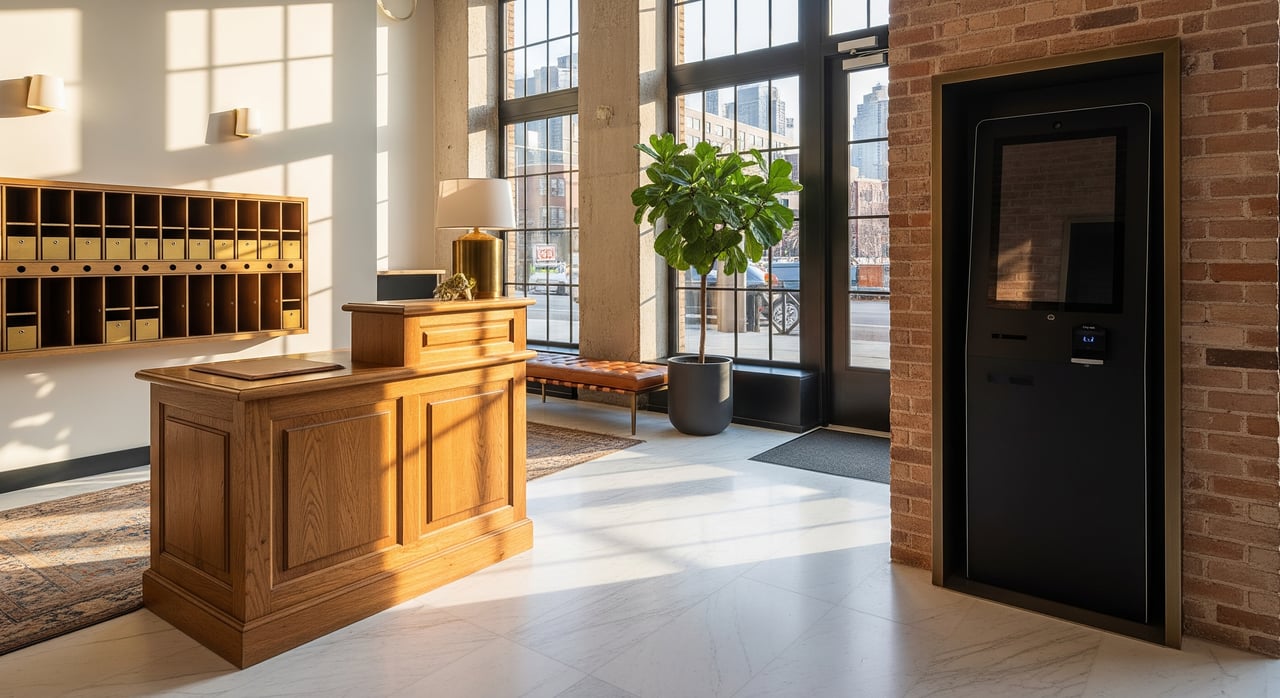
Thinking about buying in Williamsburg and unsure whether a live doorman or a virtual doorman fits you best? You are not alone. Many buyers juggle security, package flow, convenience, and monthly costs when comparing buildings across this part of Brooklyn. In this guide, you will see how each model works, where the trade-offs show up, and exactly what to ask before you make an offer. Let’s dive in.
What each model means
A traditional doorman is on-site staff who manage building access, receive packages, greet residents and visitors, and respond in person to issues. Coverage can be 24/7 or limited to certain hours. Some buildings use a concierge variation with broader guest-service duties.
A virtual doorman uses technology to control access and manage deliveries. Common setups include:
- App-based video intercoms that let you answer visitors and unlock doors from your phone.
- Smart locks and access control with fobs, role-based permissions, and detailed logs.
- Remote concierge centers that monitor cameras and manage calls off-site.
- Package lockers or rooms that generate secure pickup codes for residents.
Hybrid models are increasingly common. A building might keep live staff at peak times and rely on virtual systems overnight, or pair lockers with limited on-site coverage.
Security and access control
Live doorman security
A live doorman brings human judgment to the door. They can vet visitors, spot suspicious behavior, and step in immediately when something looks off. The visible presence of uniformed staff can deter opportunistic crime. In an emergency, they can call for help and meet responders in person.
Virtual doorman security
Virtual systems produce detailed digital logs with timestamps and stored images. You can grant temporary codes to guests or service providers and revoke access quickly. Integrations with lockers and entry controls streamline short-term access without handing out keys. The limitation is physical response. A remote operator cannot stand in the doorway to stop an intruder.
Plan for outages
Technology depends on power, internet, and vendor uptime. If a building uses a virtual system, ask about battery backup and cellular failover. You want clear procedures for power or internet loss, plus defined service-level expectations from the vendor.
Packages and deliveries
Live doorman handling
With a live doorman, packages are received, logged, and stored until you pick them up. It is straightforward and personal. The trade-off is storage space and staff time, especially during peak delivery seasons.
Virtual with lockers
In a virtual setup, couriers place parcels in lockers or a secure package room. You get a code to retrieve items, which reduces hands-on staff work and helps limit theft. Integration levels differ. Some lockers work with multiple carriers, while others may be limited or require couriers to use a specific app.
Hybrid approaches
Many Williamsburg buildings pair lockers with limited on-site coverage. Staff handle oversized items and special deliveries while lockers capture everyday parcels. This blend can reduce costs and improve reliability.
Guest experience and convenience
Live doorman convenience
If you value a personal welcome and a smooth guest experience, a live doorman is hard to beat. Visitors appreciate talking to a person. Staff can help coordinate large deliveries or support residents who prefer not to use apps.
Virtual convenience
Virtual systems are fast for tech-savvy residents. You can buzz in friends from your phone, manage vendor access, and skip keys altogether. Friction can arise for guests without smartphones or for frequent short-term visitors if access is not well managed.
Emergency response and liability
Live staff are trained on building-specific procedures and can engage right away during medical events or incidents. Virtual operators can call 911 and document events with logs, but they are not physically present. Ask about escalation steps, response times, and how the building coordinates with emergency services.
Costs and common charges
Live doorman service typically raises operating costs due to payroll, benefits, insurance, and training. In New York City, labor is a major budget line, and many residential staff are unionized, which shapes wages and scheduling.
Virtual systems shift costs to hardware, installation, software subscriptions, and ongoing maintenance. Remote concierge services and locker systems add their own fees. Savings depend on how much staffing is reduced, not just on installing new tech.
The takeaway for buyers is simple. Review the actual budget to see the staffing line items and platform fees. Costs vary widely by building size, coverage hours, union status, and vendor contracts.
Resale and market perception in Williamsburg
In Williamsburg, many buyers value the service and perceived security of a doorman, which can support pricing power in desirable buildings. At the same time, tech-forward buyers often appreciate modern access systems, especially when paired with lockers and strong building policies. Resale outcomes hinge on market perception and comps. Compare similar properties with live versus virtual models to see how buyers in this submarket are pricing services and fees.
Legal, privacy, and accessibility
- Labor and union: Many NYC building staff are represented by unions. Contracts can limit how and when staffing levels change. Ask about union status and contract dates.
- Privacy and data security: Virtual systems collect personal information and access logs. Vendors should have clear data retention policies, access controls, and security safeguards. Confirm how long footage and logs are stored and who can request them.
- Surveillance and notices: Cameras in common areas are typical, but buildings should disclose recording through signage and policies.
- Mail and packages: Buildings may accept and hold parcels, but liability can vary. Ask for the written policy and any insurance or claims history.
- Accessibility and fair housing: Intercoms and access controls should offer accessible options and avoid discriminatory barriers.
Buyer checklist for Williamsburg
Documents to request
- Current building budget and recent financials to see staffing costs and platform fees.
- Staffing contracts, union agreements, and any severance or termination terms.
- Vendor contracts for virtual systems, including term, termination, upgrade policies, and data ownership.
- Package locker or room policies and any claims history related to theft.
- Offering plan, bylaws, proprietary lease, or lease language around services and amenities.
- Incident logs or summary security reports if available.
- Technology redundancy specifications, including battery backup and cellular failover.
Questions to ask management or the board
- Is the doorman live, part-time, or virtual, and what are the exact coverage hours?
- Are staff unionized and when does the contract expire?
- How many staff per shift and what are their duties?
- How are packages handled, and are there size limits or carrier limitations?
- What are the monthly costs for the virtual system and who pays them?
- How are guests and short-term rental access managed?
- What are the outage procedures and backup plans?
- What are the data retention and privacy policies for video and access logs?
- Have residents voted on staffing changes, and are there plans to switch models?
- For condos, is doorman service defined as an included amenity in the offering plan?
On-site inspection tips
- Test the intercom if possible for response time and video quality.
- Observe lobby flow during commute hours and evenings.
- Check physical security, including door hardware, lighting, and camera placement.
- Look for secure package storage rather than parcels left in view.
- Ask neighbors about real-world security and package experiences.
Evaluate vendors and tech
- Ask which platform the building uses and for references from nearby buildings using the same vendor.
- Review uptime history, service-level commitments, and any documented outages.
- Confirm cellular failover and hardware replacement policies.
- Understand pricing models and how increases are handled.
- Check package locker sizes, notifications, and supported carriers.
Which model fits your lifestyle
Choose a live doorman if you want an immediate human presence, high-touch service, and a simpler guest experience. Expect higher operating costs reflected in monthly charges, which some buyers view as a fair trade for service and security.
Pick a virtual doorman if you prefer app-driven access, digital logs, and integrated lockers. Costs can be more predictable, but reliability depends on vendor performance and the building’s backup systems. A strong policy framework and clear outage plans are essential.
A hybrid can deliver the best of both. Limited live coverage during peak hours, paired with modern access tech and lockers, often balances service with cost. Whatever you choose, anchor your decision in documents, vendor contracts, and how the building actually operates day to day.
If you want a data-driven review of a Williamsburg building’s services, budgets, and resale implications, reach out. You will get practical guidance and a clean comparison that fits your goals. Connect with Julio Izquierdo to start your search.
FAQs
What is the practical difference between doorman and virtual doorman?
- A live doorman offers in-person access control and immediate response, while a virtual system manages entry through cameras, apps, and lockers with no on-site staff.
How do doorman and virtual doorman affect monthly condo charges?
- Doorman buildings usually carry higher staffing costs, while virtual systems shift expenses to hardware, subscriptions, and maintenance that may lower or reallocate fees.
Are virtual doorman systems reliable during power or internet outages?
- Reliability depends on backup plans; look for battery and cellular failover and clear vendor service commitments to keep access functioning.
How are packages handled in buildings without a live doorman?
- Virtual buildings often use lockers or secure rooms that issue pickup codes, reducing theft and staff time compared to ad hoc deliveries.
What should I ask a board before a building switches models?
- Ask about union and contract terms, transition costs, vendor selection, outage procedures, data policies, and whether residents have voted on the change.