Two data points from the same neighborhood, same quarter. The median sale price in Williamsburg was $1.4M for the three months ending May 2026, down 7.2% year over year, while the median price per square foot climbed to roughly $1,630, up 9.0% over the same period, per Redfin's May 2026 update. Both figures cover the same buildings, the same buyers, the same 48 average days on market. Only one of them is telling you what your budget actually buys.
If you are shopping Williamsburg off the portal median, you are shopping a number that has been pulled downward by product mix, not by softening prices. The neighborhood has split into three distinct tiers, and treating them as a single market is the fastest way to misread every offer sheet you see this fall.
The two numbers that shouldn't both be true
Median down. Per-square-foot up. Volume up sharply, from 68 May closings in 2025 to 115 in May 2026. Days on market almost halved. Sale-to-list ratio holding at 99.3%.
None of that describes a weak market. It describes a market where the average unit that traded got smaller and moved faster, while the price of a square foot inside those units kept climbing. Homes.com's July 2026 snapshot reads consistently: a $1,595,000 median across 134 active condo listings ranging from $675,000 to $5,995,000, at 69 days on market. Zillow's ZHVI as of June 30, 2026 was $1,396,037, up 5.4% over the prior year, which is a home-value index that smooths through the mix effect.
Read the three sources together and the story is not price compression. It is a bifurcation between what is being listed, what is closing, and what is being priced per foot inside each transaction.
Three tiers under one ZIP code
The 11211 label covers three product types that behave like separate markets. Named comparables make the tiers legible.
| Tier | Representative product | Typical ask (2026) | What drives the price |
|---|---|---|---|
| New waterfront condo | One Domino Square, One Williamsburg Wharf | $1,925,000 for a 1BR at One Domino Square, penthouses trading at record per-foot pricing | East River views, sponsor amenities, resale-restricted supply |
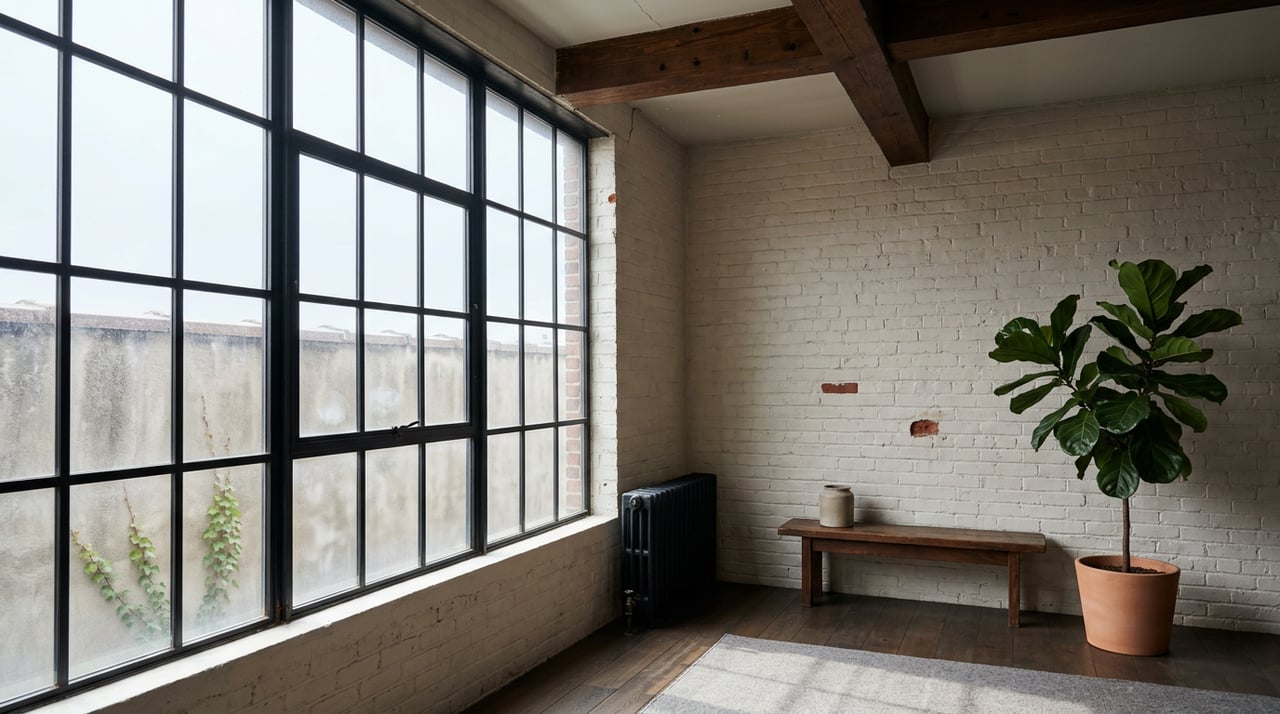
| Converted prewar loft | The Mill Building at 85 North 3rd Street, similar Kent Avenue conversions | Roughly $1.6M to $3M for one- to two-bedroom lofts, with a 1,800-square-foot Mill Building loft asking $2,995,000 | Ceiling heights, original beams, scarcity of true conversions |
| Inland resale condo | Post-2015 mid-rise condos east of Bedford Avenue | $750,000 to $1.3M for one-bedrooms per broker guidance published in early 2026 | Comparable to Greenpoint and Bushwick alternatives, most exposed to interest-rate sensitivity |
The One Domino Square data anchors the top of the range. 6sqft reported in February 2026 that Penthouse 3A at One Domino Square went into contract at $7 million, which would clock in at $3,313 per square foot, the highest in the neighborhood if it closes at that number. That is one transaction. Its gravitational pull on the per-foot median is disproportionate, because it sits inside a supply cohort that Two Trees and Selldorf Architects designed to price at a premium and hold at that premium.
At the other end, a 4,000-square-foot new-construction townhouse at 172 North 6th Street is asking $7,975,000, a different product entirely and largely uncorrelated with condo per-foot movement.
Why the median is a bad compass right now
Mix shift is doing most of the work in the numbers.
More small waterfront units cleared this spring than in spring 2025. Naftali Group's Williamsburg Wharf brought Four Williamsburg Wharf online for leasing on January 6, 2026 with 128 market-rate apartments starting at $3,980 a month, closing out the first phase of an 850-unit master plan across five 22-story towers designed by Brandon Haw Architecture, Hill West, Rockwell Group, Ward + Gray, and Studio Munge. Sponsor sales inside the same complex have been setting per-foot records since late 2024. When a wave of high-per-foot but smaller-floorplate units closes in the same quarter, the median dollar figure drops even as the per-foot figure rises. That is the arithmetic, not a market call.
Meanwhile, the older resale condos that used to sit at the middle of the distribution, larger footprints east of Bedford, are trading closer to ask but at flat per-foot pricing. Those buyers are budget-anchored. The waterfront buyer is view-anchored. Two different price discovery processes are producing one blended headline number, and the blend has shifted.
For a buyer, this matters in a specific way. If your budget is $1.4M and you are shopping Williamsburg because the median matches, you will find that number buys either a one-bedroom in a new waterfront building or a two-bedroom in a mid-2010s inland condo. Those are not the same asset, and they will not appreciate on the same curve.
What the pipeline does to your timing
The supply picture over the next four years is heavily front-loaded on the waterfront and constrained inland.
Along Kent Avenue, a 36-story twin residential tower at 280 Kent Avenue designed by REX for Two Trees is expected to be completed by 2030, per rendering coverage in June 2026. A 17-story mixed-use building at 289 Kent Avenue, designed by FXCollaborative for Web Holdings LLC, will yield 280 rental apartments including 70 affordable units, contingent on a rezoning. River Ring, Two Trees' two-building Bjarke Ingels Group project on River Street between North 1st and North 3rd Streets, is under construction with 1,050 units and a resilient waterfront park by James Corner Field Operations. The Kent Peaker Plant at 49 River Street is scheduled to close in 2030 under New York's Build Public Renewables Act, with Two Trees proposing a $56 million battery storage facility and 1.3-acre elevated park on top of the site, per Greenpointers reporting in June 2026 and a unanimous Community Board 1 letter of support to the New York Power Authority.
The upshot for a buyer this year: the waterfront tier will keep absorbing new sponsor supply at premium per-foot pricing through decade-end, which sustains upward pressure on the per-foot median. Inland resale inventory does not have a comparable pipeline shock coming, so those units will trade closer to fundamentals: rate movements, comp-driven ask reductions, and building-specific balance sheets.
How to price your search
The disciplined way to shop Williamsburg in this cycle is to ignore the neighborhood median and set your budget against a specific tier.
- Pick your tier before you pick your buildings. If you want river views and full-service amenities, budget against per-foot pricing in the $1,600 to $2,000 range for standard floors, and higher for high floors and penthouses.
- If you want space over view, look at the 2015 to 2022 vintage inland condos. Per-foot pricing there is closer to $1,100 to $1,400, and days on market are longer, which gives you negotiation room a waterfront listing will not.
- Review the reserve fund and any pending assessments in every building you tour. Newer waterfront towers carry higher common charges tied to amenity load. Older converted lofts sometimes carry deferred capital projects that surface at contract.
- If you are cross-shopping Greenpoint or Bushwick, price the L train and G train differential into your offer, not into your emotional read of the neighborhood.
- Time the pipeline. The next major sponsor deliveries at Williamsburg Wharf and River Ring will pull agent attention and marketing dollars toward the waterfront. Inland resale sellers who list into that noise tend to negotiate.
FAQ
Is Williamsburg a buyer's market or a seller's market right now? Neither cleanly. The 99.3% sale-to-list ratio and 48-day median time on market as of May 2026 point to a seller's market on price. The 7.2% year-over-year drop in the median dollar figure points to a buyer's market on headlines. Read them by tier and the answer is: seller's market on the waterfront, closer to balanced inland.
Why do converted lofts trade above new construction on some deals? Supply is capped. The Mill Building, 85 North 3rd Street, and the small cohort of true prewar conversions cannot be reproduced. New waterfront condos can, and the pipeline shows they will be. Scarcity carries a premium that survives cycles.
Does the new waterfront supply threaten resale values in older Williamsburg condos? Not directly. The buyer pools are largely distinct. The risk to older resale is rate-driven, not supply-driven, because the new towers are pricing above the resale market rather than into it.
What is the single most useful number to track this year? Per-foot pricing by tier, not neighborhood median. Ask any agent you interview to show you their last three closed deals inside the tier you are shopping, with square footage and per-foot math.
Buying in Williamsburg this cycle rewards a valuation discipline that portal medians cannot give you. If you want a per-foot read on a specific building or a comparable set built against a target unit, Julio Izquierdo will run the analysis and walk you through the pricing logic before you write an offer. Get your instant home valuation to start.